The dish in front of you

What is actually in this dish? Pork, peanut, shellfish and chilli, dish by dish

In short

How do I know whether I can eat this?

Four questions decide it — pork, peanut, shellfish, chilli — and they land differently on each dish. Xiaolongbao is pork sealed inside the skin, so there is nothing to pick out. Mapo tofu says tofu and is usually cooked with minced pork. Kung Pao chicken looks mild and carries peanuts. Roujiamo defaults to pork, and the beef version is a different stall. Dan dan noodles put pork, peanut and chilli in one bowl with the meat too fine to separate. Har gow is shrimp you can see through the wrapper.

Get the wording to ask with

Applies to

Anyone eating out in China who avoids pork, peanut or shellfish, or who cannot take much chilli — whether for allergy, religion, diet or preference.

Check before you rely on it

These are the editors' judgement about the standard version of each dish, not a sourced fact: no official page publishes what is in a bowl, and recipes vary by region, restaurant and cook. Use them to know which question to ask; the sourced wording for asking it is on the allergy, halal and vegetarian pages.

Information checked:

This is not an introduction to Chinese cuisines. It is a table for the moment a dish arrives and you need to decide, in a few seconds, whether it is yours to eat.

Chosen for how they differ, not for fame

Dish by dish, with the trap named

Each of these was picked because one of the four questions lands on it in a way a menu will not tell you.

These cues are the editorial team's judgement about the standard version of each dish, not a sourced fact: no official page publishes what is in a bowl. Recipes vary by region, by restaurant and by cook. Use them to know which question to ask — the pages linked beside each dish carry the sourced wording for asking it.

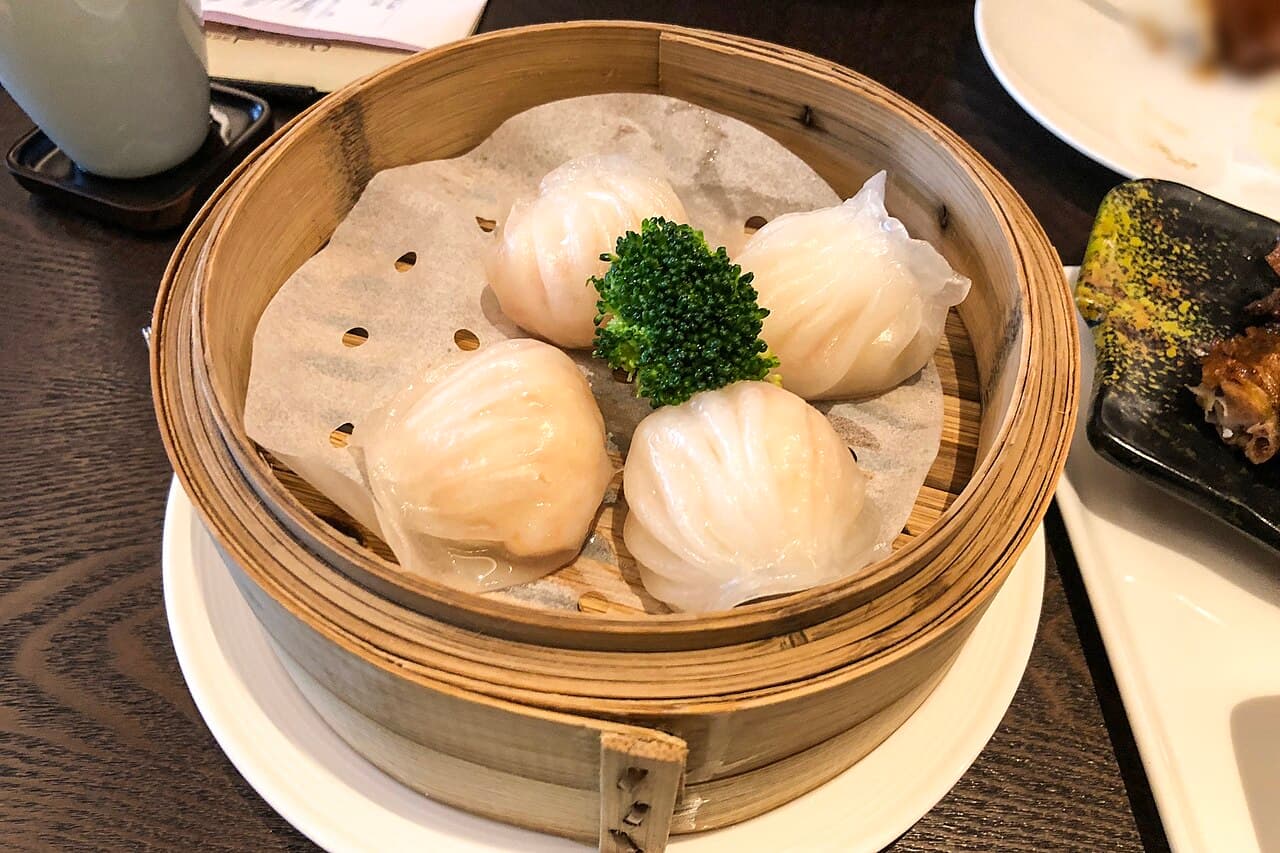
Four translucent pleated dumplings in a bamboo steamer, with pink shrimp visible through the wrappers

Har gow 虾饺

Pork: sometimesPeanut: noShellfish: usuallyChilli: not-spicy

The signature Cantonese breakfast dumpling: whole shrimp wrapped in a translucent skin and steamed. The wrapper is deliberately see-through, so the shrimp is visible before you pick it up.

What to do: A shellfish allergy is the reason to learn this one on sight: at a dim sum table the steamers arrive together and the shrimp fillings are not announced. Har gow, siu mai and many rice-noodle rolls all carry shrimp, so the question is worth asking once for the whole table rather than dish by dish.

Watch for: Siu mai, the yellow open-topped dumpling usually served alongside, is normally pork with shrimp on top — the two are ordered together so often that avoiding one and not the other rarely works.

Photograph by N509FZ, CC BY-SA 4.0 source

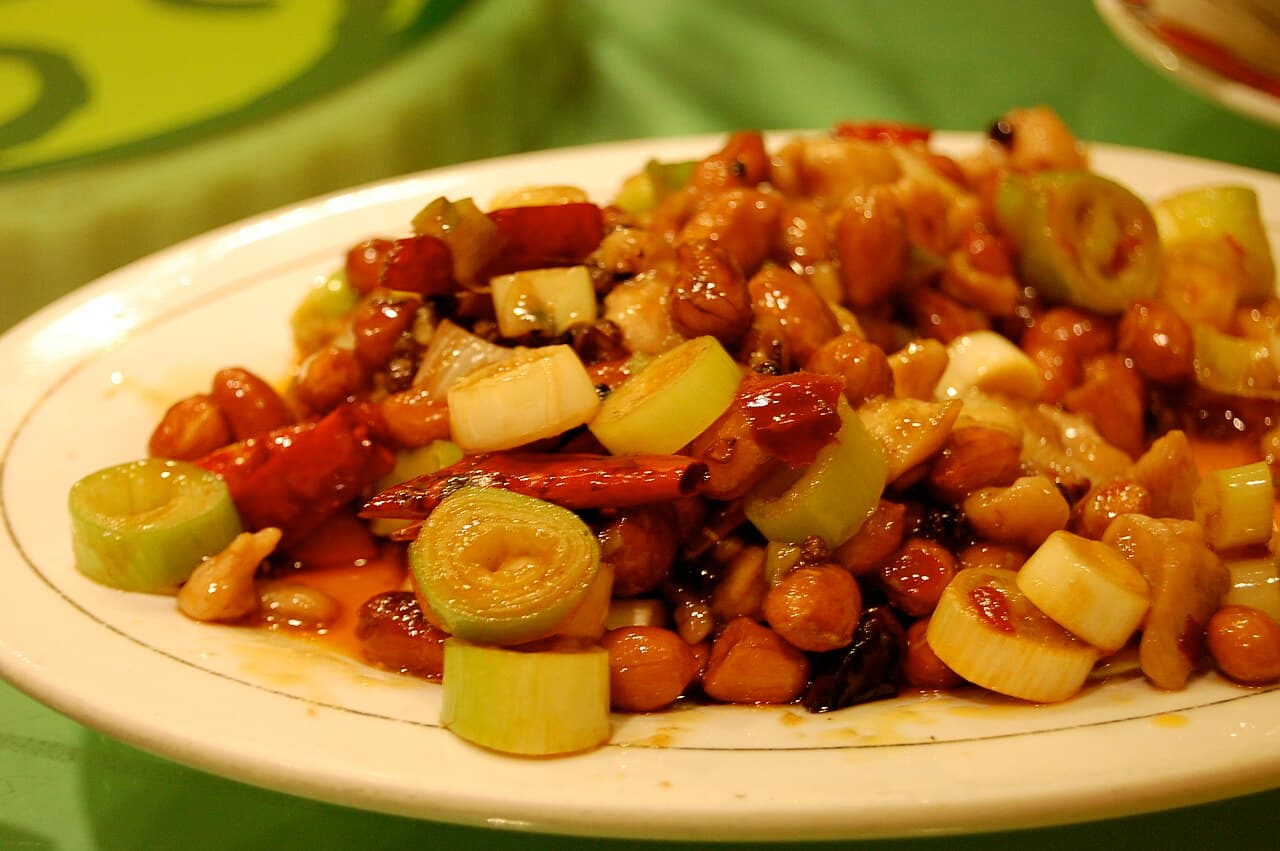
Diced chicken stir-fried with whole dried chillies, spring onion and visible peanuts on a white plate

Kung Pao chicken 宫保鸡丁

Pork: noPeanut: usuallyShellfish: noChilli: mild-to-hot

Diced chicken stir-fried with dried chillies, spring onion and peanuts. The peanuts are not a garnish you can pick around — they are cooked through the dish.

What to do: If peanuts are the problem, this is the dish to recognise on sight, because it looks mild and is not. Carry the allergy wording rather than asking in English at the table.

Photograph by Steven G. Johnson, CC BY-SA 3.0 source

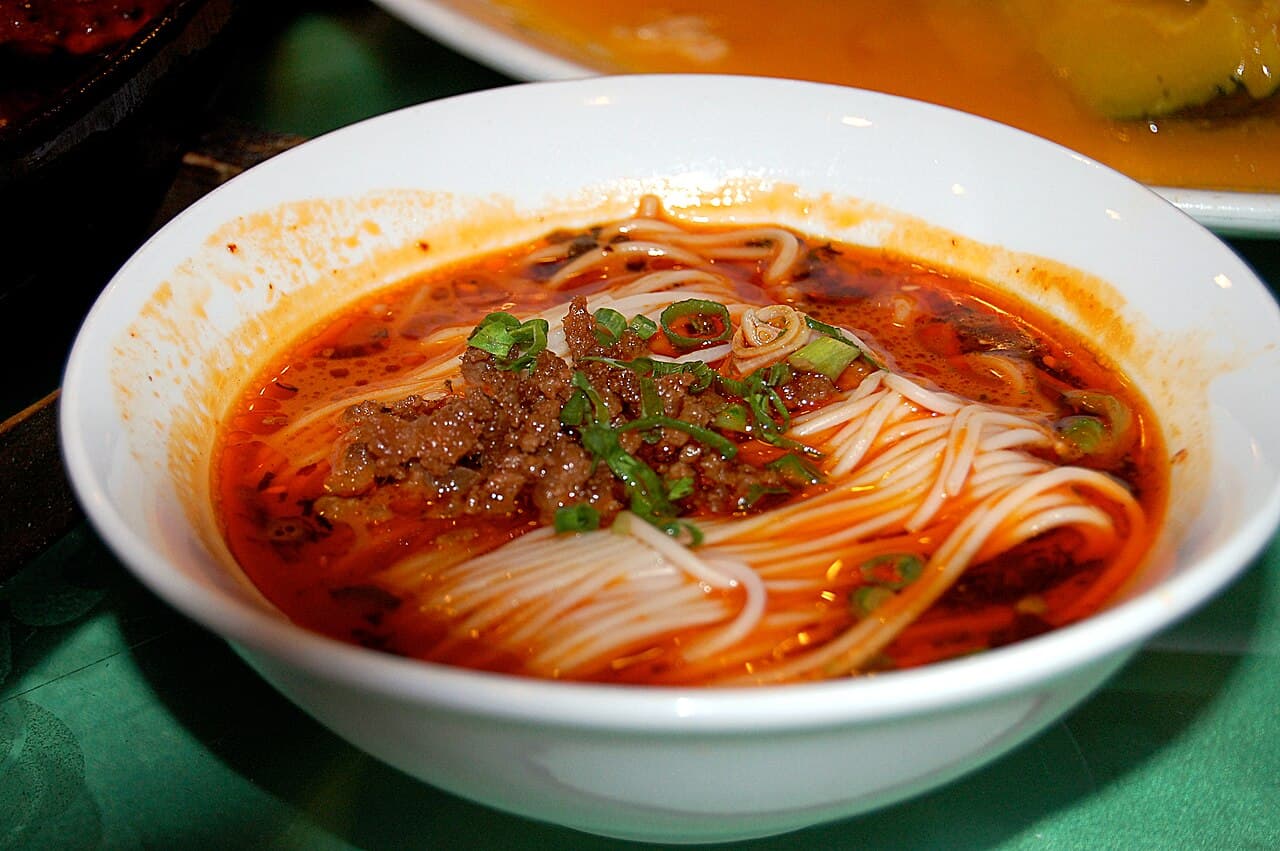
Noodles in a red chilli-oil broth topped with minced meat and spring onion

Dan dan noodles 担担面

Pork: usuallyPeanut: sometimesShellfish: noChilli: hot

Noodles under minced meat with chilli oil, usually with sesame or peanut in the sauce. The minced meat is normally pork.

What to do: This is the one that catches people who avoid pork: the meat is minced and stirred in, so there is nothing to leave on the side. Ask before ordering, not after it arrives.

Watch for: The photograph is the soupy version served in Shanghai. In Chengdu the same name usually arrives close to dry, with a thicker sesame sauce and much less liquid.

Photograph by Steven G. Johnson, CC BY-SA 3.0 source

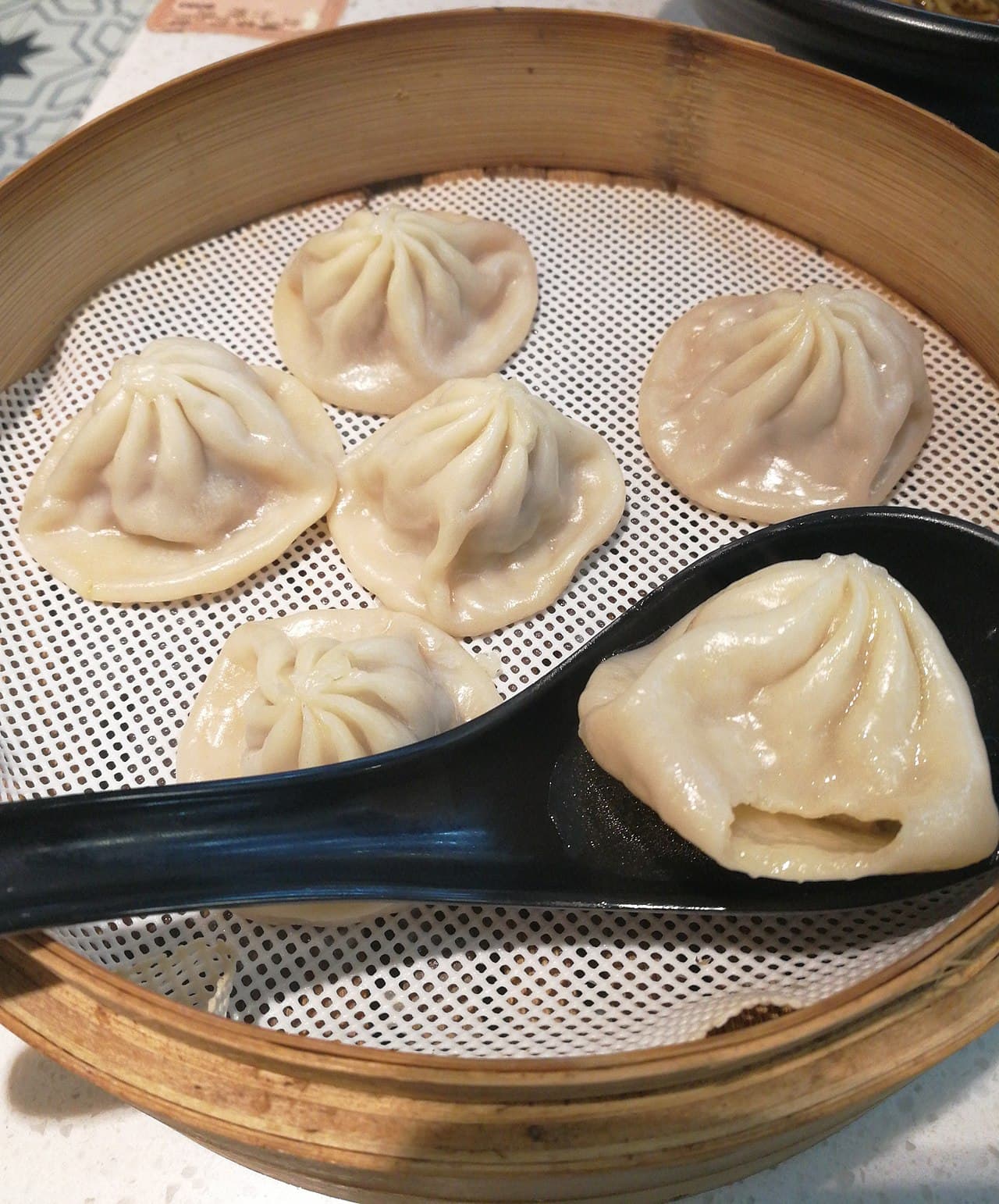
Steamed soup dumplings in a bamboo steamer with a soup spoon

Xiaolongbao 小笼包

Pork: usuallyPeanut: noShellfish: noChilli: not-spicy

Thin-skinned steamed dumplings filled with pork and hot soup, served in a bamboo steamer.

What to do: Pork is the default filling, and the filling is sealed inside, so it cannot be inspected before biting. Bite carefully in any case: the soup inside is hot enough to burn.

Photograph by Robigasp, CC BY-SA 4.0 source

Flatbread buns split and filled with shredded braised meat

Roujiamo 肉夹馍

Pork: usuallyPeanut: noShellfish: noChilli: not-spicy

Shredded braised meat packed into a split flatbread — the version most often described in English as a Chinese hamburger.

What to do: The default filling is pork, but the beef version is common in Muslim-quarter streets and is a different stall, not a different order at the same stall. If pork is the issue, choose the stall first.

Photograph by P. Xie, CC BY-SA 3.0 source

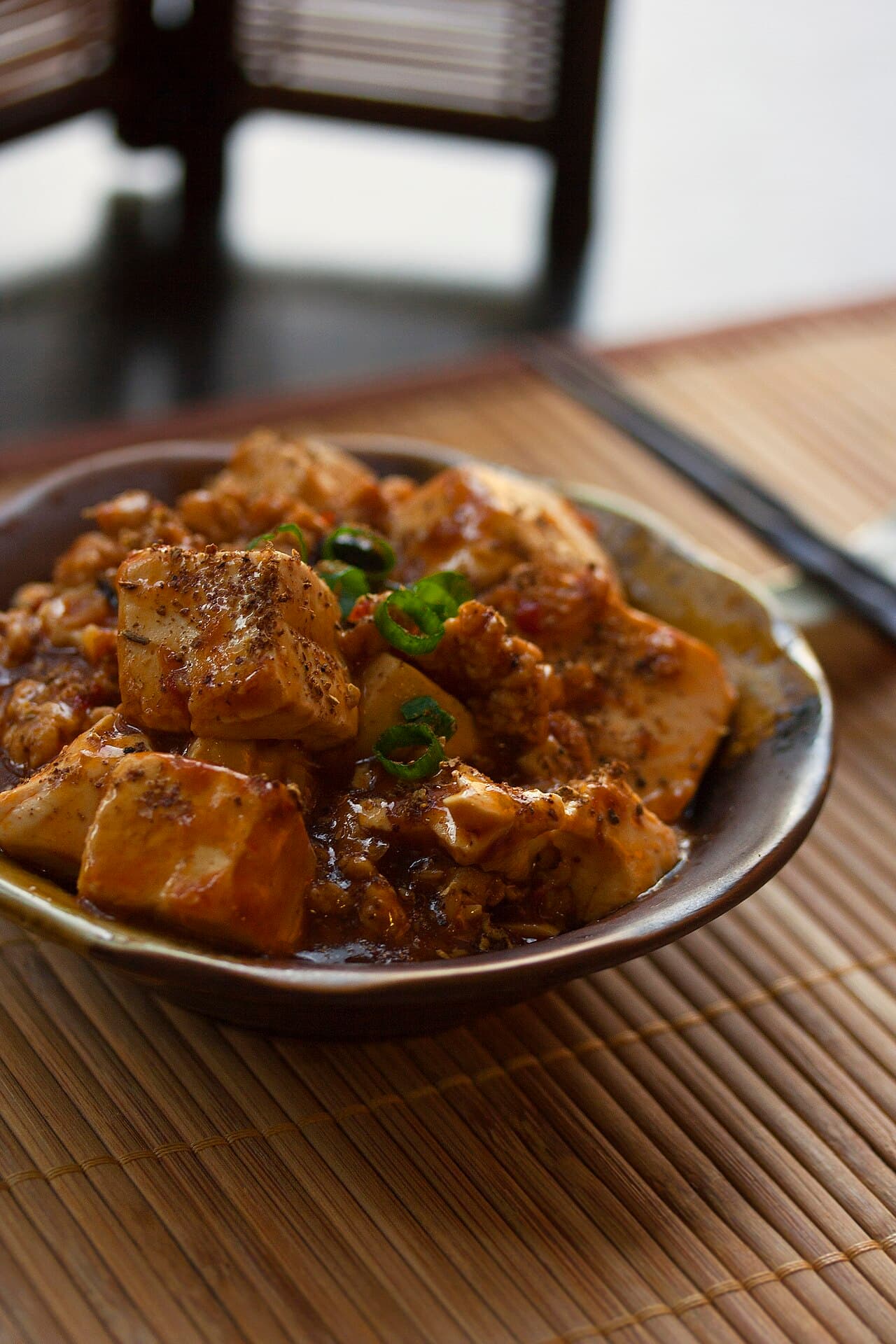
Cubes of tofu in a red chilli-oil sauce with minced meat and spring onion

Mapo tofu 麻婆豆腐

Pork: sometimesPeanut: noShellfish: noChilli: hot

Soft tofu in a chilli-and-Sichuan-pepper sauce, normally with minced beef or pork stirred through it.

What to do: Tofu on the menu does not make this a vegetarian dish — the minced meat is part of the standard recipe. The numbing feeling from the Sichuan pepper is normal, not an allergic reaction.

Watch for: The photograph shows firmer, larger tofu cubes than the very soft version usual in Sichuan.

Photograph by Archon6812, CC BY-SA 3.0 source

Dish cues reviewed

In short

The questions people actually type

Short answers, with the same caveat: the standard version of a dish, not a promise about the one on your table.

Does xiaolongbao have pork?

Standard xiaolongbao is pork, and the filling is sealed inside the skin — there is nothing visible to pick out and nothing to inspect before biting. Crab-and-pork and chicken versions exist but are ordered by name; the default in most places is pork. If you avoid pork, this is one to ask about before it arrives rather than after.

Is mapo tofu vegetarian?

Usually not. The dish is named for the tofu, which is why it reads as a safe vegetarian order, but the standard version is cooked with minced pork or beef and the meat is fine enough to disappear into the sauce. Some restaurants will make it without on request; that is a request, not the default.

Does Kung Pao chicken have peanuts?

Yes — peanuts are part of the standard dish, not a garnish. It is worth knowing because the dish looks mild and unremarkable next to obviously spicy plates, so it is often the one a peanut-allergic traveller picks as the safe option.

Is roujiamo always pork?

The default is pork. A beef version exists and is common in Muslim-run shops, but it is usually a different stall rather than an option at the same counter — so the answer depends on which shop you are standing in, not on how you order.

What is the hardest dish to eat around if I avoid pork, peanut and chilli?

Dan dan noodles put all three in one bowl, and the pork is minced fine enough that separating it is not realistic. If any of the three is a hard limit for you, this is a dish to skip rather than to modify.

Which dim sum items carry shellfish?

Har gow is whole shrimp in a translucent wrapper, and the shrimp is visible through the skin. Siu mai, the yellow open-topped dumpling served alongside, is normally pork topped with shrimp. At a dim sum table the steamers arrive together and fillings are not announced, so a shellfish allergy is worth raising once for the whole table.

Say it, do not guess it

The sourced wording for an allergy, and what a label must legally disclose.

Open allergy guide

Halal, and what a sign board means

The halal board is a licence, not decoration — who issues it and what it certifies.

Open page

Vegetarian without the stock trap

Why 'no meat' at a counter is weaker than an ingredient list, and what to ask instead.

Open page

Next move

Leave each page knowing what to do next.

Read enough to make the decision smaller, then open the checklist, search a specific question, choose a setup tool, or share the page with the person planning with you.

Official sources for rules, fares, payments, safety, and device setup.
Written around the day-one jobs: pay, connect, move, eat, get help.
Recommendations stay attached to a traveler task.

I need the next step

Use the checklist when the question has shifted from research to preparation.

Open checklist

I know the problem

Search by the actual problem: Alipay, eSIM, transit visa, first transfer, vegetarian food, or a city name.

Search the site

I am ready to choose

Open recommendations when the task is clear enough for a short list to be useful.

See recommendations