01
Needs live checkEntry path
Confirm passport, route, stay length, first entry city, arrival card, and whether a visa-free, visa, or transit path applies.
Traveler job
Know whether the trip can legally start before buying more plans.
First-transfer readiness
Airport transfers, metro, high-speed rail, ride-hailing, tickets, and the recovery choices that make the first day easier.
Trip path
Use this page to choose the first airport-to-hotel movement before expanding into metro, rail, taxis, and intercity route planning.
01
Needs live checkConfirm passport, route, stay length, first entry city, arrival card, and whether a visa-free, visa, or transit path applies.
Traveler job
Know whether the trip can legally start before buying more plans.
02
Use with caveatMake maps, translation, wallet prompts, hotel details, and support contacts usable before leaving the airport.
Traveler job
Keep the phone useful when the traveler is tired, offline, or moving.
03
Use with caveatPrepare one primary wallet, one linked card, one backup card or cash path, and the first small checkout flow.
Traveler job
Complete the first snack, taxi, or restaurant payment without debugging in a queue.
04
Needs live checkChoose the first airport-to-hotel route, save the hotel address in Chinese, and keep a fallback if data or payment is slow.
Traveler job
Reach the hotel without making the airport arrival the hardest part of the trip.
05
ReadyPick one low-friction meal area or restaurant type and prepare ordering, dietary, and QR-payment fallback notes.
Traveler job
Eat something simple before chasing the perfect food plan.
06
ReadySave emergency numbers, insurer details, consular support, hotel contacts, and lost-passport backup before travel day.
Traveler job
Know who to contact if luggage, payment, health, documents, or transport fails.
07
ReadyChoose a first base and route shape only after entry, phone, payment, transfer, meal, and support basics are stable.
Traveler job
Avoid building an exciting route on top of unresolved first-day risk.
Transport answers
These guides connect first-time transport searches to the practical checks travelers need before leaving arrivals.
Choose the transfer you can read under fatigue: hotel pickup, taxi, metro, or rail link only after you know the arrival terminal, payment path, and luggage reality.
There is no single best airport transfer. Choose the option that still works when tired: hotel pickup or taxi for late arrivals and heavy bags, metro or rail when timing, luggage, payment, and station exits are clear.
For the first ride, choose the method that is easiest to recover from: a station ticket machine or service desk, a city transit QR code inside a wallet app, or a local transit card if the city supports it clearly.
Use high-speed rail only after the first-city basics are stable, then verify the station name, passport ticketing rules, luggage reality, arrival-side transport, and the official train schedule.
Problem guides
These guides answer the two transport questions that appear most often before a first China trip: airport-to-hotel and high-speed rail.
Choose metro, taxi, Didi, airport bus, or hotel pickup using arrival time, luggage, hotel district, phone readiness, and payment fallback.
Open transfer guideWhat cancelling or changing a ticket costs, hour by hour, plus the document checked at the gate and the limits station security applies.
Open rail guideWhat the operator publishes for inbound users, the payment claim nobody has confirmed, and the backup for each setup step.
Open DiDi guideThe four ticketing routes Beijing publishes, in the order to try them, ending with a card you can buy at the airport.
Open metro QR guideWhat the airline owes you depends on the cause. The four-way split the regulator publishes, plus the no-fee rebooking and refund rules.
Open disruption rulesYour home licence alone is not enough. The temporary permit two cities publish, what it costs, and where to apply inside the airport.
Open driving rulesWho travels free, the height and age tests, the luggage allowance, and what sits outside it.
Open family and access guideSince June 2025 a unit with no readable CCC mark cannot fly inside the mainland. Check the casing before you pack.
Open power bank rulesThe driver must run the meter and hand you a receipt; you may refuse to pay if they do not. Keep the receipt — it is how you get a left bag back, and 12328 is the line to call.
Open street taxi guideEnable the transport code once and the same scan opens the metro gate and the bus reader, charged after the ride. The 交通联合 card is the no-app fallback.
Open transit code guideThe booking is real-name against the document you entered on, and the gate checks that it matches. What counts, what does not, and the published fallback if the passport is being re-issued.
Open domestic flight guideThe 100 ml clear-bag rule you know does not apply: mainland domestic flights bar carry-on liquids outright, with a narrow cosmetics exception. Plus the lithium-battery watt-hour tiers.
Open carry-on rulesTransfer sequence
Transport gets easier when the traveler already has a working phone, payment fallback, and a low-friction plan for what happens after arrival.
Choose the airport-to-hotel mode with luggage, arrival time, and the hotel address in Chinese.
Add to checklistTransport decisions depend on data, maps, translation, ride screens, and one payment fallback.
Check appsA simple food plan prevents the first transfer from ending with a tired payment or menu problem.
Plan first mealLast checked:
Use airport, metro, railway, and city operator sources for final fares, schedules, station rules, and service notices. This page helps you choose a sensible transport plan; it is not a live timetable.
What may change
Fallback action
Save the hotel address in Chinese, one ride-hailing or taxi fallback, and the airport help desk/operator page before landing.
First transfer
A traveler can learn trains and metro later. The page earns trust when it makes the first movement after landing feel clear enough to do while tired, carrying luggage, and checking a phone.
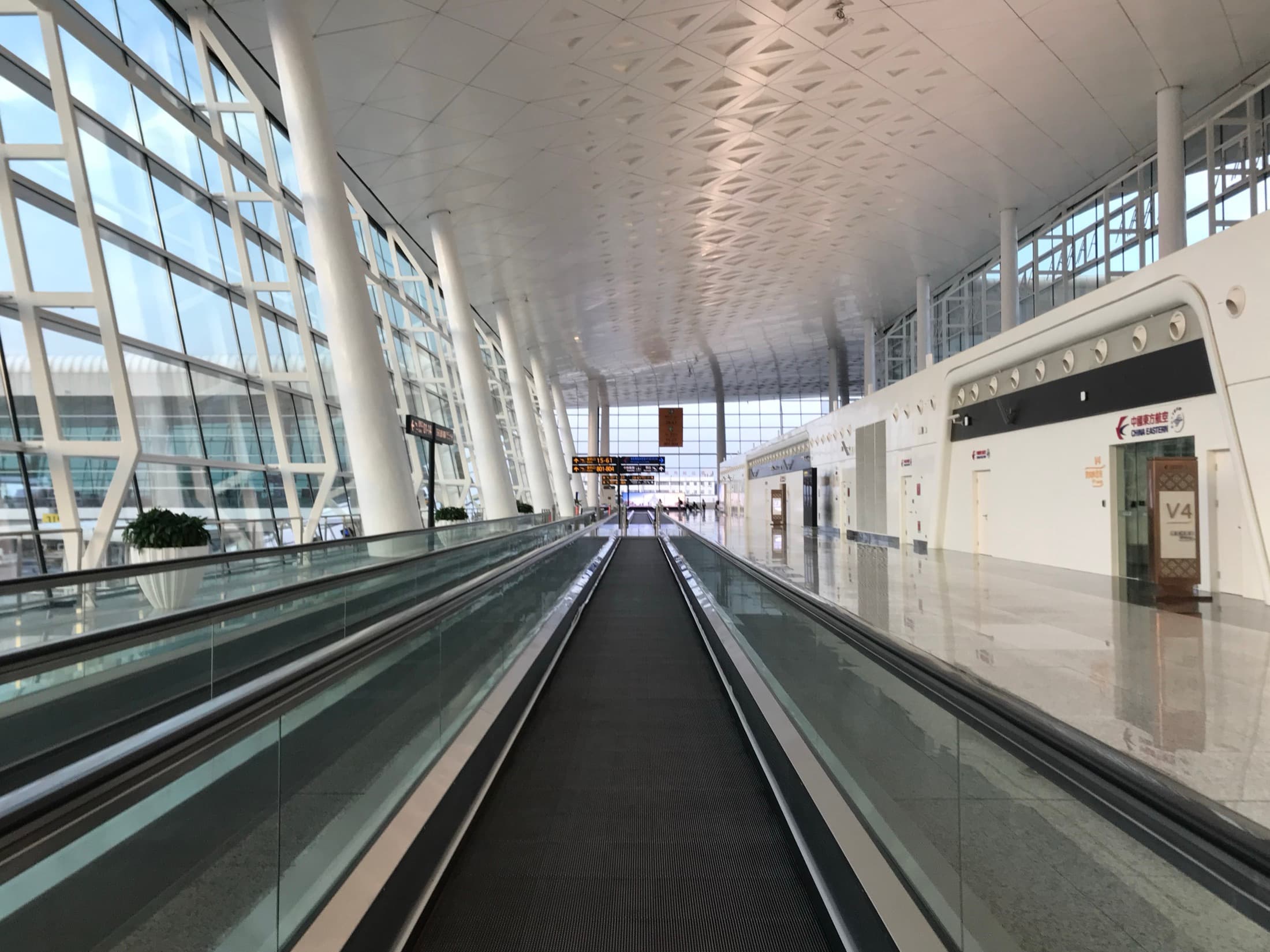
First-transfer choices
A strong transport section helps travelers solve the airport leg first, learn just enough city movement for day one, and delay bigger route complexity until it is useful.
The most important transport decision is the very first one after landing, because that sets the emotional tone for the whole trip.
Best option
Know how you will leave the airport before the plane lands.
Backup option
Keep the hotel address, Chinese name, and one fallback route saved offline.
Metro and short in-city movement should make the trip feel more legible, not more intimidating.
Best option
Learn only the basic metro and station patterns for your first city.
Backup option
Use ride-hailing or hotel help when the system stops feeling obvious.
Most first-time travelers do better when long-distance trains or domestic flights are added only after payments and daily movement feel calm.
Best option
Expand the route after the first base is working well.
Backup option
Cut one internal transfer if the route starts to feel fragile.
Official transit evidence
Use metro, airport, and 12306 operator sources whenever final schedules, fares, or service notices can change.
Shanghai
Use the metro route/fare query for city movement and the airport site for Pudong/Hongqiao transfer modes before writing exact fare copy.
Open official sourceBeijing
Use the city portal for transportation/payment orientation and the airport source for arrival services, airport express, taxi, and help-desk planning.
Open official sourceChengdu
Use the airport operators for arrivals, service calls, terminal guidance, and the choice between metro, bus, taxi, airport line, rail, or scenic shuttle.
Open official sourceGuangzhou
Use the bilingual route and fare widget for live metro planning before relying on a fare or transfer.
Open official sourceShenzhen
Pair metro planning with the airport transport section so arrivals can choose metro, taxi, or airport transfer with luggage.
Open official sourceChongqing
Use the official bilingual metro site for route checks; keep hill-city walking and transfer fatigue in the page copy.
Open official sourceBefore you book · May 3, 2026
These official city, airport, metro, and government references help travelers check transport details before committing to a route.
Beijing
authoritative — directly from Beijing government English portal; covers all four ticket methods and Alipay setup steps. High utility for first-time Beijing visitors.
Open official sourceBeijing
High value for Japan-based travelers (JCB) and US travelers (AmEx). Confirms contactless payment is possible without a Chinese bank account.
Open official sourceShanghai
authoritative — Shanghai Metro official site confirms network scale, fare tool existence, and contact number. Useful for confirming metro as primary urban transit option.
Open official sourceShanghai
authoritative — official airport site confirms all ground transport options and service contacts. Essential arrival information.
Open official sourceChengdu
authoritative — official airport site with service and complaint numbers. Confirms metro and scenic direct bus options.
Open official sourceChengdu
authoritative — official Tianfu site confirms service types and contact. Relevant for international arrivals using the newer airport.
Open official sourceShanghai
authoritative — gives travelers a verified channel for escalation.
Open official sourceBeijing
confirms 12345 exists as a general service number; travelers can use it for non-emergency issues.
Open official sourceFare table not available as static text; the interactive fare query tool requires JavaScript. Exact fare amounts were not captured in this pass.
Page notes '5 most used overseas cards' but only names JCB and AmEx explicitly. Full list of 5 networks not confirmed from this source.
No metro fare table found for secondary cities. Shenzhen and Guangzhou metro official sites likely JS-heavy.
Shanghai Metro exact fare table (interactive tool not extractable as static text; use fare query tool URL + hotline)
City transfer comparison
Verified official URLs are kept for metro, airport, and rail planning. When a fare table, hotline, or map is not confirmed, the page says so instead of guessing.
Official transport anchors
Airport first
Airport Express (PEK)
Rail backup
12306 remains the official intercity rail anchor.
Ticketing methods for foreign visitors available on Beijing government English portal (e.g., Alipay Metro QR, kiosks, counters)
Live check still needed: Official route map direct URL needs a live check; Operator hotline needs a live check on an official page.
Official transport anchors
Airport first
Metro Line 2 (PVG/SHA)
Rail backup
12306 remains the official intercity rail anchor.
Confirm metro ticketing and payment options on the operator page before relying on a specific fare or QR method.
Live check still needed: Direct route map URL needs a live check; Fare table is interactive; static fare URL needs a live check.
Official transport anchors
Airport first
Metro / Airport Express (CAN)
Rail backup
12306 remains the official intercity rail anchor.
Confirm metro ticketing and payment options on the operator page before relying on a specific fare or QR method.
Live check still needed: Direct route map URL needs a live check; Fare table or query URL needs a live check.
Official transport anchors
Airport first
Metro (SZX)
Rail backup
12306 remains the official intercity rail anchor.
Confirm metro ticketing and payment options on the operator page before relying on a specific fare or QR method.
Live check still needed: Direct route map URL needs a live check; Fare table or query URL needs a live check.
Official transport anchors
Airport first
Metro / Shuttle (CTU - Shuangliu)
Rail backup
12306 remains the official intercity rail anchor.
Confirm metro ticketing and payment options on the operator page before relying on a specific fare or QR method.
Live check still needed: Direct map URL needs a live check; Fare URL needs a live check.
Official transport anchors
Airport first
Metro / Shuttle (CKG)
Rail backup
12306 remains the official intercity rail anchor.
Confirm metro ticketing and payment options on the operator page before relying on a specific fare or QR method.
Live check still needed: Direct map URL needs a live check; Fare URL needs a live check.
What movement looks like
International travelers need more than route names. They need to recognize the airport decision, the metro rhythm, and the last kilometer to the hotel.
After a long flight, the right decision is the one you can execute with luggage, a new SIM, and a saved hotel address.

Metro is often the easiest way to make city movement repeatable, especially when station names and transfers are saved in advance.
The final kilometer is where maps, translation, payment, and hotel address screenshots become more useful than a perfect plan.
Arrival transfer board
Official city, airport, and metro sources are strong enough to stop treating every arrival the same. Each city points to the source that answers the first movement question.
Shanghai
Source proof: Shanghai Airport official transport categories plus Shanghai Metro route and fare query.
Beijing
Source proof: Capital Airport official guide and Beijing international portal.
Chengdu
Source proof: Shuangliu and Tianfu airport operator pages.
Qingdao
Source proof: Qingdao airport official source plus Qingdao Metro live checks.
Movement first
This section helps travelers understand airport arrival, city movement, and when to think about intercity travel without overcomplicating the first days.
The first route after landing matters more than tourists expect because it sets the tone for the trip.
Open routeUse this route when the traveler needs to feel that trains and metro are understandable before arrival.
Open routeTrain and intercity logic should be planned only after the first base and first 48 hours are stable.
Open routeSequence
Start with the arrival leg, then learn city movement and intercity rail only when those choices are about to matter.
Landing
Use the transfer mode that feels most legible for your arrival energy, not the one that looks most optimized on paper.
First 24 hours
Focus on hotel, one neighborhood, and one return route before trying to master the whole transit network.
After the city feels easy
Trains and second-city movement work best after daily basics already feel stable.
What movement looks like
Station signs, platforms, and route rhythm are easier to trust when you can see the movement before you arrive.

A usable transport section should help international visitors recognize station signage and platform logic before arrival.
Open related pageMost travelers do better when the first transport decisions are simple enough to survive tiredness and luggage.
Open related page
The right first base often depends on how much transit complexity the traveler actually wants on day one.
Open related pageBefore you book
Airport transfer, train booking, and city transport advice stays practical, with official operator pages linked for final schedules, station details, and service notices.
China Railway 12306
Official train booking and passenger-service platform for high-speed rail and intercity railway movement in China.
Open sourceShanghai Airport Authority
Useful official reference for airport buses, metro, taxis, and transfer planning after landing in Shanghai.
Open sourceBeijing Capital International Airport
Official reference for airport express, taxi, bus, and arrival services for first-time Beijing arrivals.
Open sourceNext move
Read enough to make the decision smaller, then open the checklist, search a specific question, choose a setup tool, or share the page with the person planning with you.
Use the checklist when the question has shifted from research to preparation.
Search by the actual problem: Alipay, eSIM, transit visa, first transfer, vegetarian food, or a city name.
Open recommendations when the task is clear enough for a short list to be useful.