Back to Destinations

Practical city brief

Chongqing

Chongqing is the dramatic mountain city for hotpot, monorails, river lights, steep streets, and a China trip with high visual energy.

Choose Chongqing when you want intensity, food, night views, and urban drama rather than a gentle first landing.

Quick answer

Use Jiefangbei as the base and build the first night around Hongya Cave and river lights.

Use this page when

Food-first travelers who actively want hotpot

Share this page

EmailWhatsAppXSuggest fix

Send this guide to a travel partner, family member, or yourself before departure.

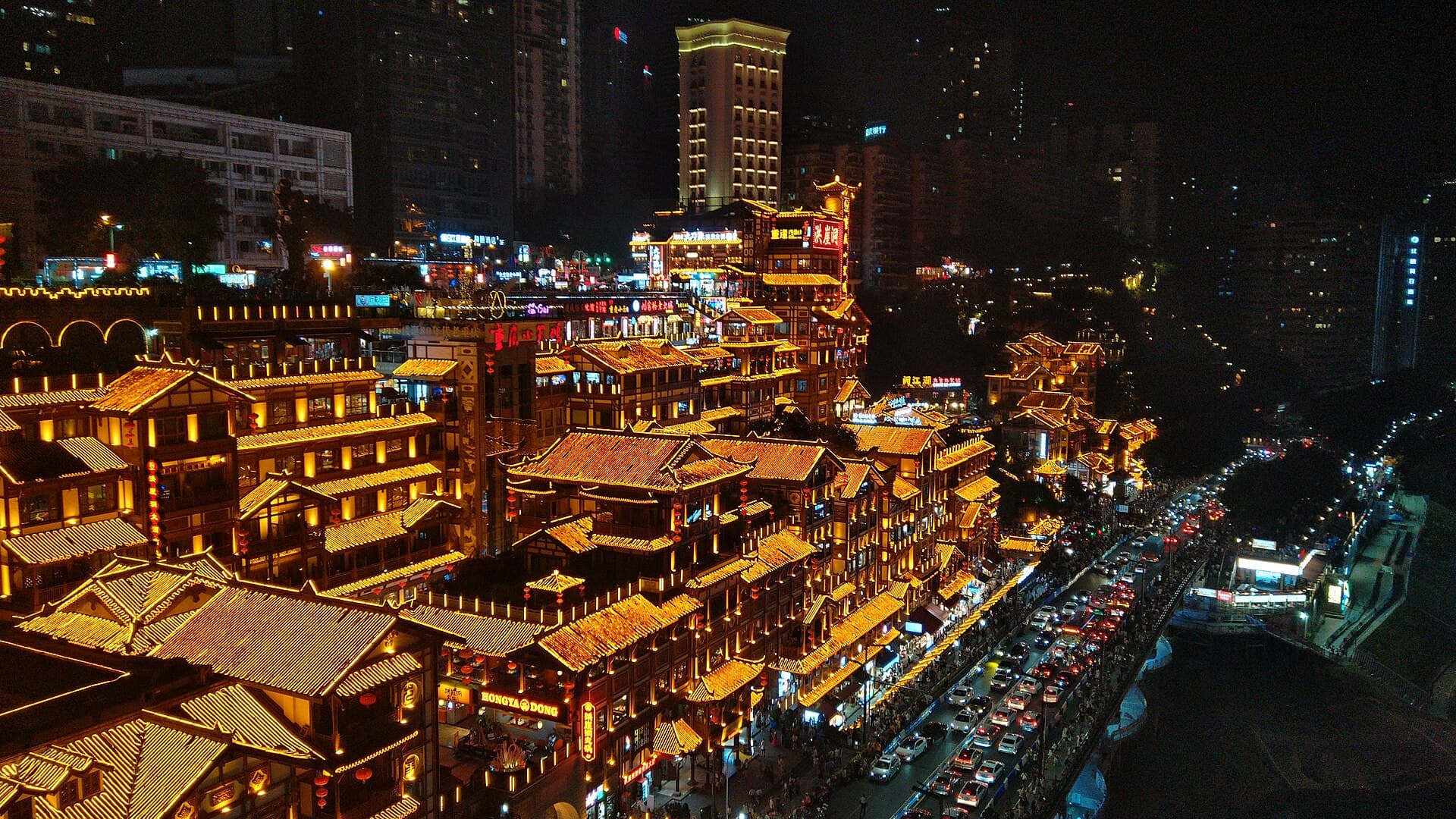
Hongya Cave illuminated at night in Chongqing

Real city reference

Chongqing

Photo Jonashtand · CC BY-SA 4.0

Real situations

Chongqing: what matters before you go

These cards turn source research into traveler-facing decisions: what to see, what to eat, and what the city will feel like on the ground.

Urban drama

Hongya Cave, Liziba, cableway, and Shancheng Lane

Current destination evidence gives Chongqing strong usable content: Hongya Cave at night, Yangtze River Cableway, Liziba monorail-through-building, Shancheng Lane, 18 Steps, and Jiefangbei.

Sights

1.Night lights
2.Cableway
3.Monorail
4.Steep lanes

Food confidence

Hotpot needs a survival plan

Chongqing hotpot is a core experience, but visitors need plain-language guidance: yuan-yang pot, mild-spice phrase, sesame-oil dip, peanut milk, and a non-spicy backup meal.

Food

1.Yuan-yang pot
2.Mild request
3.Sesame oil
4.Backup noodles

City feel

A wartime capital turned vertical megacity

Chongqing's identity has two layers: wartime capital from 1937 to 1945, and today's viral mountain megacity of bridges, cliffs, tunnels, elevated highways, stairs, trains through buildings, and river lights. It is cinematic because it is physically difficult to understand at street level.

Feel

1.Wartime capital
2.Two rivers
3.Vertical streets
4.Viral skyline

Official sources

Source anchors used for this city brief

These links show the source layer behind the city brief and where travelers should recheck live operator details before booking.

What to see first

The first-night path should be simple: Jiefangbei, 18 Steps or Shancheng Lane, then Hongya Cave after the lights come on. Liziba and the cableway work better as separate daytime anchors.

What to eat first

Do not just say 'eat hotpot.' Explain how to survive it: order yuan-yang, ask for mild, use sesame oil dip, keep a plain carb nearby, and accept that Chongqing mild may still be hot.

How to frame the city

Chongqing is a reward city, not a frictionless city. It is best for travelers who want sensory payoff and can tolerate crowds, stairs, spice, humidity, and the challenge of navigating a city where the map can look flat but the street is vertical.

At a glance

What this page helps you decide

The quick version first: what to understand, what to choose, and what still deserves a live check.

Read

Choose Chongqing when you want intensity, food, night views, and urban drama rather than a gentle first landing.

Decide

Use Jiefangbei as the base and build the first night around Hongya Cave and river lights.

Check

Avoid it as a first city if spice, stairs, crowds, or visual chaos will raise stress.

Before you act

Separate the decision from the live check.

This page can narrow the choice. Prices, tickets, app screens, and policy details still belong with the current official or operator source.

Decide here

Whether this place fits the role you need for the first trip.

Still verify

Exact attraction tickets, reservation windows, opening hours, weather, and transport changes.

Best use

Use this as a city-fit brief before you build the route.

City practical brief

What a visitor needs to know in Chongqing

The city brief starts with the ordinary things that shape the stay: food, arrival movement, and where to find help.

Food comfort

Eat with less guesswork

Chongqing Hot Pot (重庆火锅)Xiao Mian (重庆小面)La Zi Ji (辣子鸡)Chuan Chuan (串串香)

Chongqing breakfast centers on xiao mian (spicy noodles) — the city's signature morning dish. Also popular: haochi (assorted snacks), wontons, and steamed buns.

Dietary move: Sichuan peppercorn is ubiquitous. If you have texture sensitivities, the numbing sensation may be uncomfortable. Inform staff.

Open food source

Arrival movement

Solve the first transfer

Metro / Shuttle (CKG)

Use the official metro or airport page for current ticket, route, and payment details before choosing the first transfer.

Help and safety

Save the fallback layer

Police

110

Ambulance

120

Fire

119

If passport lost, report to local police and contact your embassy/consulate.

Open support source

City experience brief

What Chongqing feels like after the logistics are solved

After the basics, the useful question is not only what to see, but what the city feels like and which places deserve a real check before you spend the day.

Human environment

Read the city before you plan the day

Cyberpunk mountain city with 8D navigation. Chongqing feels dramatic, intense, and visually stunning. The city is built on hillsides along the Yangtze River, creating a multi-level urban landscape where roads pass over buildings and metro lines emerge from mountains. Chongqing is famous for its hotpot culture, foggy mornings, and futuristic night views. The city is one of China's most talked-about destinations on social media. Locals are known for being straightforward, spicy-food-loving, and resilient.

Good first areas

  • Yuzhong district — peninsula center, Jiefangbei, Hongya Cave
  • Jiangbei district — Guanyin Bridge shopping, modern
  • Nan'an district — south bank, river views, less touristy
  • Shapingba district — universities, Ciqikou Ancient Town

Etiquette cue

Chongqing culture is direct and passionate. Hotpot is a social ritual — sharing a nine-grid pot with locals is the best way to experience the culture. Order 'wei la' (mildly spicy) if you can't handle extreme heat. Tipping is not expected. Public behavior is generally relaxed, but the city's hilly terrain means walking requires good shoes and stamina. The city has a reputation for being less polished than coastal cities but more authentic.

Open cited source

Crowd and safety rhythm

Chongqing is generally safe but can be overwhelming for first-time visitors due to its complex terrain. Major attractions like Hongya Cave get extremely crowded during holidays; visit on weekdays. Summer (June-August) is extremely hot (40°C/104°F is normal) — avoid if possible. The city is known as a 'furnace city.' Autumn (September-November) is ideal with comfortable temperatures and fewer crowds. Navigation apps may be unreliable due to the multi-level streets; ask locals for directions.

Hongya CaveLiziba StationCiqikou Ancient TownShancheng Lane

Best option

Use Jiefangbei as the base and build the first night around Hongya Cave and river lights.

Backup option

Avoid it as a first city if spice, stairs, crowds, or visual chaos will raise stress.

Good for

  • Food-first travelers who actively want hotpot
  • Photographers and city walkers who like dramatic urban form
  • Visitors who want China to feel big, vertical, and intense

Watch out for

  • Holiday crowds around Hongya Cave
  • Spice level that is hotter than many travelers expect
  • Steep routes, stairs, and confusing vertical navigation

Action checklist

  • Base around Jiefangbei for the first visit.
  • Order yuan-yang hotpot if spice tolerance is uncertain.
  • Avoid Hongya Cave at peak holiday times if crowds are stressful.

Continue

Leave with one next page, not five open tabs.

If this page answered the question, continue to the closest related step. If it did not, search for the exact issue rather than browsing sideways.

Next move

Leave each page knowing what to do next.

Read enough to make the decision smaller, then open the checklist, search a specific question, choose a setup tool, or share the page with the person planning with you.

Official sources for rules, fares, payments, safety, and device setup.
Written around the day-one jobs: pay, connect, move, eat, get help.
Recommendations stay attached to a traveler task.

I need the next step

Use the checklist when the question has shifted from research to preparation.

Open checklist

I know the problem

Search by the actual problem: Alipay, eSIM, transit visa, first transfer, vegetarian food, or a city name.

Search the site

I am ready to choose

Open recommendations when the task is clear enough for a short list to be useful.

See recommendations